
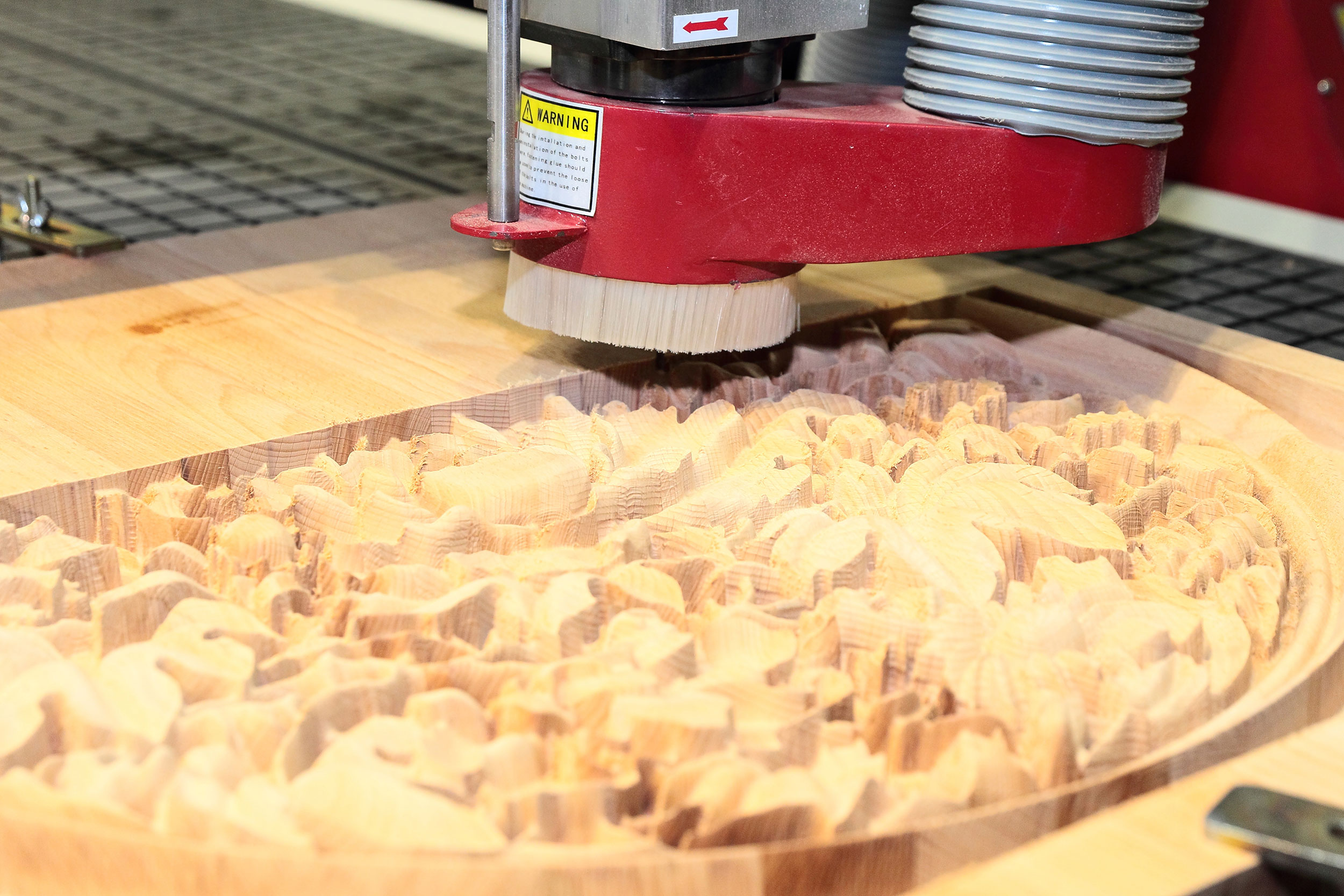
CNC stands for Computer Numerical Control. You may be familiar with the concept of 3D printing, a method of manufacturing items by layering a material, usually plastic, in very thin sheets to create your chosen shape. CNC, on the other hand, can produce objects from a whole range of materials including wood and metal, as well as being a lot quicker than 3D printing.
By combining CAD (Computer Aided Design) and CAM (Computer Aided Manufacturing), you can use CNC machining to produce most anything you want by simply inputting the precise dimensions of your design into a programme (the CAD step of the process) and then inputting the dimensions of your chosen material and choosing the tools you wish the machine to employ in order to carry out the manufacture of your object (the CAM step of the process).
After feeding these instructions into your CNC machine, it will produce for you a perfect replication of your chosen design, offering precision to the most minute of details quickly and efficiently, as well as being able to replicate your design an innumerable amount of times, so you can produce matching pieces of furniture identical to the last detail.
Reducing the potential for human error as well as the length of time the manufacturing process takes means that CNC is a highly efficient way of producing furniture in a range of different materials for a variety of purposes and offering the potential for mass production.
CNC machining does not replace the need for humans in terms of manufacture or production, as people are necessary for carrying out the design of objects and inputting the accurate data required for the CNC machine to do its job. However, CNC machining is much quicker than human craftsmanship and does not allow for human error outside of the initial data inputting stage.
It is also an extremely versatile method of production, able to adapt to a huge variety of materials and create an almost infinite number of shapes and designs with the massive selection of tools and programmable tasks the machine has available at its disposal.
Where precision production and manufacture is concerned, you would be hard pressed to find a more efficient solution than CNC machining.